Cornell Chronicle

Afghan visual artist Elja Sharifi, currently a visiting scholar at the Herbert F. Johnson Museum of Art, sees her escape from the Taliban as a call to action. She will enter Cornell’s PhD program in art history next fall.
Source
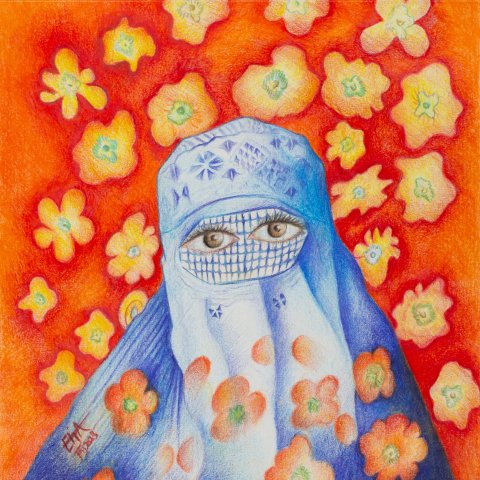
Afghan visual artist and scholar Sharifa “Elja” Sharifi fled Afghanistan in September 2021, a month after the Taliban seized control. She found a new beginning at Cornell's Herbert F. Johnson Museum of Art, where she has been able to continue her work over the past two years.
Source
Speakers at “Dissident Writers: A Conversation” explored how writers keep freedoms open for others by taking risks to criticize governments or societies in environments where there is a cost.
Source
At Cornell’s Johnson Museum of Art, the work of renowned artist Guadalupe Maravilla is on display in the same space as that of Ingrid Hernandez-Franco, a Salvadoran woman whose asylum case was championed by a Cornell professor and her students.
Source
A new center housed at the Cornell Jeb E. Brooks School of Public Policy will bring together leading experts from across the university to tackle the fundamental questions facing democracy around the globe.
Source
Doctoral candidate Ivonne Kienast received the 2024 Maribel Garcia Community Spirit Award from the Einhorn Center for Community Engagement for her commitment to wildlife conservation and education in Africa.
Source
Through the Guild and Team USA Learning Network, eCornell will be the preferred provider of professional education for Team USA over the next five years.
Source
Cornell Atkinson has announced its 2024 Postdoctoral Fellows, who work jointly with a Cornell advisor and an external advisor from a partner organization.
Source
McKenzie Carrier ’24 and Margot Treadwell, ’24 will spend next year conducting research with the organization in Washington, D.C.