

Cornell Chronicle
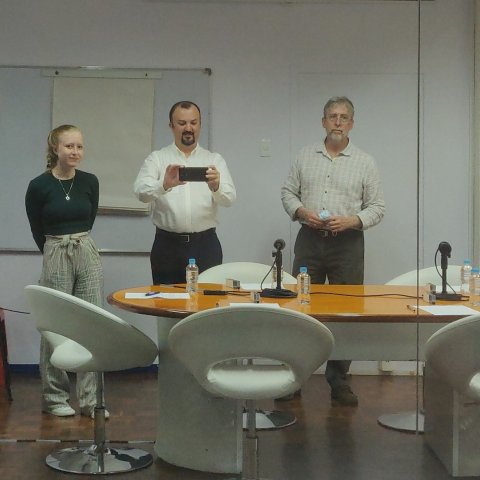
From Ken Roberts' recent research in Ecuador and evidence ripped from headlines worldwide, when political parties stoke partisan conflicts–often by contesting formal state institutions, like systems for managing elections–actual democratic capacity may take a hit as public opinion polarizes.
Source

On July 1, the digital research respository arXiv, house at Cornell Tech, will transition to an independent nonprofit, enabling faster technological development, expanded partnerships and long-term financial sustainability.
Source
Weill Cornell Medicine anesthesiologist Dr. Gunisha Kaur has been appointed to the U.S. Commission on International Religious Freedom, an agency that monitors the universal right to freedom of religion or belief.
Source
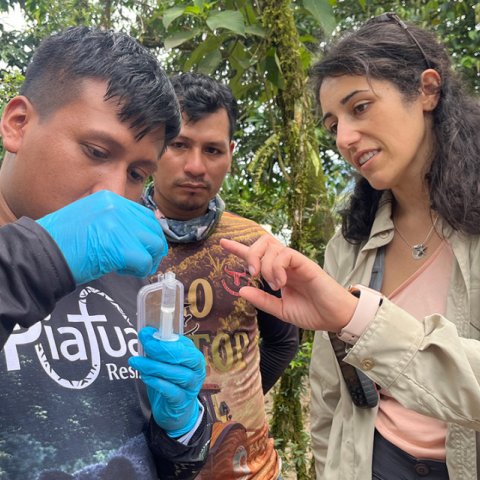
A partnership between Cornell researchers and indigenous communities in the Ecuadorian Amazon is marrying traditional and scientific knowledge to protect river ecosystems and their rich biodiversity. Their work is supported by a Global Hubs seed grant.
Source
A new report shows protecting nutrition now depends on integrating food and health systems as climate shocks strain both at once.
Source
The majority of national climate adaptation plans fail to fully integrate health needs or engage populations most at risk from climate change, according to a new study.
Source
Cornell Atkinson has awarded $900k to support six new research projects that seek to protect coral reefs, improve greenhouse agriculture and understand whether wildfires affect disease spread.
Source
Researchers identified very different mechanisms behind two historic eruptions of Mount Etna in Italy – a finding that can help geologists assess the risk of future eruptions.
Source
As the class of 2026 graduates in Arts & Sciences, we celebrate their extraordinary journeys.